

Summer 2026
Newsletter Number Thirty
Dear Friends:
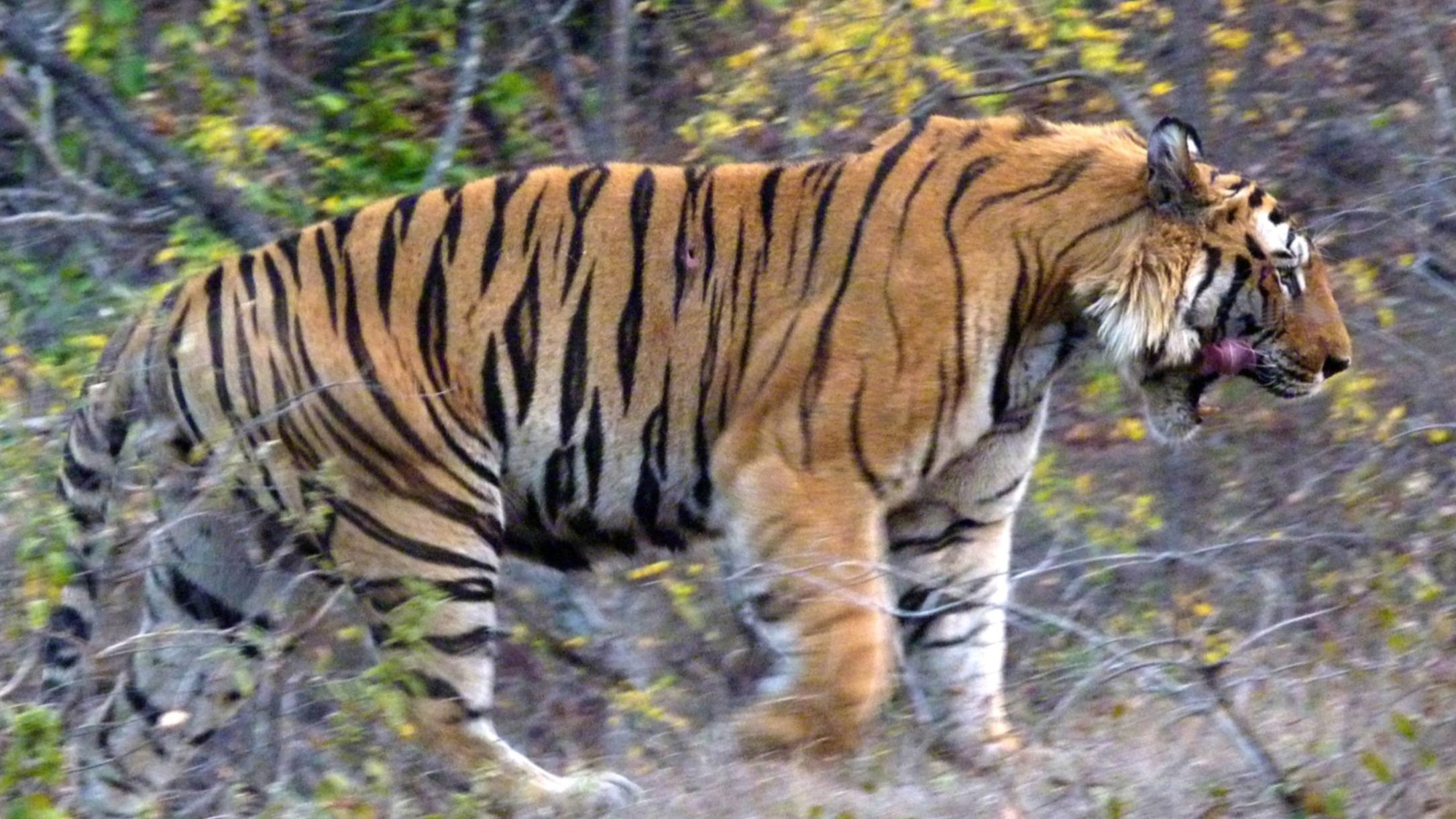
Looking back over the 30 years that The Fund for The Tiger has been operating, there has been an interesting change in the tiger dynamics in South Asia. In the late 1990’s and early 2000’s the issue always seemed about investigating seizures of tiger contraband. Tiger bones were found in a warehouse in New Delhi; tiger bones were found at an airstrip in NW Nepal bound for Tibet via a trade route to Mt. Kailas; a truckload of skins was seized in a town in NE India; and a vast consignment of tiger skins was documented at a warehouse in Tibet bound for the Far East. They were all tigers from India and Nepal. It was a constant game of catch-up, going after the bad guys after tigers had already been killed. Today the dynamic has changed and thankfully it’s more a battle to protect healthy tiger populations and keep them safe. Tigers are doing very well, particularly in Central India and Nepal, but this poses challenges. There will be more infighting within limited habitat. As tigers disperse seeking new territory, there will be increased human-tiger conflict as we have seen in Nepal, and the ever-present poaching gangs will be tempted to target tigers who have moved out of protected areas to satisfy a lucrative market for tiger parts in the Far East. This is a good challenge to have.
NEPAL
Global Tiger Day was July 29th and Nepal proudly used this as an opportunity to announce the results of its latest tiger census. 429 tigers were reported, up from 355 in 2022. Nepal was the first country to meet the goal of doubling its tiger population set at the St. Petersburg Tiger Summit in The Year of The Tiger, 2010. The next Year of The Tiger, 2022, Nepal recorded 355 tigers, almost 3 times the 121 tigers counted in the 2010 census.
The survey was conducted during the first six months of 2026 and covered an impressive 2860 sq. miles using 3600 cameras. It was focused on the 5 major National Parks and protected areas where tiger populations live along the southern Nepal/India border in a vast swath of jungle and forest known as the Terai. Most famous is Chitwan National Park in Central Nepal. Chitwan is Nepal’s first national park, established in 1973, now with a tiger population of 145. Bardia comes in at 112, Parsa at 71, Banke at 51, and out in the Far West, Sukla Phanta has 50 recorded tigers. It’s encouraging to note that the numbers at the smaller protected areas, Parsa, Banke, and Sukla Phanta, almost doubled since the 2022 census.
There was no mention in the latest report about tigers that have moved up into the hill regions above the Terai. A camera trapping report in March documented several tigers living in the Chure hill regions at an elevation of 3000 ft. Some of the camera sets captured both tigers and leopards in the same camera, indicating competition for resources and prey species. There is no data yet on whether or not these tigers were merely transient tigers searching for new territory of if they have established resident territories. Time will tell. While it is encouraging that tigers are moving into new territory thus lessening the pressure on core protected areas, this will also put them into harm’s way with villages and isolated human settlements.
Nepal’s success in tiger conservation and the increase in human-tiger conflict puts the focus on the challenges ahead. No doubt serious discussions will now ensue over what Nepal’s maximum tiger carrying capacity is, or should be, as incidents of human-tiger conflict continue. As this report shows, there are two trends in Nepal this year, both attributed to increased tiger numbers. Leopards are being pushed out into village life, causing more mayhem, and there are more tiger injuries and deaths from territorial infighting.
With the vision of Dr. Bhim Gurung, The Fund for The Tiger in 2009 began funding the Community Based Anti-Poaching Unit (CBAPU) at Dalla in the southwestern corner of Nepal’s Bardia National Park. Our facility is at the edge of the Khatta corridor, a network of 74 community forests covering 202 sq km, providing safe passage for tigers between Bardia National Park in Nepal and Katarniaghat Wildlife Sanctuary in India, and “represents a cornerstone initiative designed to foster collaborative conservation efforts, enhance community participation and strengthen the management of protected areas.” We received an excellent report in July, highlighting activities in the first half of 2026. Our team conducted 5 major anti-poaching patrols with the Nepal Army, met with 260 community members regarding conservation needs, and worked to resolve 13 localized human-wildlife conflict incidents. The greater Bardia landscape has been a hotbed of wild animal conflict, mostly involving leopards. According to the Kathmandu Post, wildlife attacks have claimed 11 human lives in Nepal’s Bardia district within the past year. Eight of the deaths were caused by leopards, two by tigers and one by an elephant. The figures mark a sharp increase from the previous fiscal year, when six people were killed in wildlife attacks. The disproportionate number of leopard conflicts is a direct result of increasing tiger populations. As tiger numbers increase, younger ones will disperse into the buffer zones and community forest. Leopards, wanting no battle with a tiger, will push away from the deep forest and into direct proximity with village settlements.
Based on the success of the CBAPU at Dalla Post, Bardia, we consolidated our efforts at Chitwan National Park (CNP) in Nepal, and in 2018, initiated a CBAPU at Meghauli village. Dr. Bhim Gurung coordinates this program through the Nepal Tiger Trust. (NTT). Our team conducts regular patrolling with the Nepal Army and Chitwan National Park rangers. Like at Bardia, the CBAPU is involved in communicating with local villagers to mitigate human wildlife conflict issues and works together with CNP to provide logistical anti-poaching field support.
We continue to support the Long-Term Tiger Monitoring Project started by Chuck McDougal in the 1970’s. This is now the signature campaign of the Nepal Tiger Trust, formed in 2010 by McDougal, Gurung, and a cadre of Tiger Tops naturalists. In the recent tiger census, Baburam Mahato and Raju Kumal of the NTT served as team leaders during the survey, and a team of 3 from the NTT put in 178 person-days towards this important national effort.
Baburam and his team have been especially busy these past few months. In March, a resident male tiger was observed near a village with an injury to his shoulder. A team from Chitwan National Park, Nepal Army, and the NTT used camera traps and elephant patrols to monitor this tiger for 10 days until evidence indicated that he was moving well and had returned deep into the nearby forest. In May, a young male sub-adult was found dead near the Bhimle Guard Post in Chitwan. Baburam reports that he was apparently killed by another male tiger during a territorial dispute. In June, a young male tiger, responsible for multiple livestock depredation incidents in the Madi Valley of Chitwan, was immobilized and taken to Chitwan National Park Headquarters for observation to determine if he had any injuries or issues that would prevent it from living normally in the wild. It has not yet been determined if and when he will be released. And, on June 6th, the long time resident matriarch of the Meghauli area of Chitwan, the tigress known as Meghauli Pothi was found dead, apparently killed by another tiger. She was 12 years old, produced 4 litters, and has played a crucial role in maintaining and sustaining the tiger population in this core area of Chitwan National Park.
Never a dull moment in the heart of the jungle.
Nepal has won international praise for the excellent work it has done preserving and protecting its population of wild tigers over the past 25 years. It must now find the proper balance between increasing tiger populations and the security concerns of the villages and settlements in proximity to tiger country.
INDIA
The Indian tiger conservation success story is in no small part due to the brilliant and hard-hitting work of the Wildlife Protection Society of India (WPSI) under the direction of Belinda Wright, awarded the Order of The British Empire [OBE] by Queen Elizabeth in 2003, for her tireless work on behalf of the Indian tiger, and Nitin Desai, Director of Central India Operations. We have been pleased to partner with, and support their work since 1996.
The Investigation into Poaching and Illegal trade in Wild Tigers has been the signature program of the WPSI since its inception. A year ago, we reported that two new tiger poaching cases indicated a resurgence of organized tiger poaching in Central India after a lull of almost a decade. Investigations proved that 4 tigers had been killed in Maharashtra, and the contraband was now using a trade route out of Assam in NE India, continuing on to Mong La in Myanmar destined for the infamous wildlife smuggling mecca, the Chinese-controlled Special Economic Zone on the Lao-China Border. In 2024, an investigative action known as the Rajura case resulted in the arrest of 16 individuals, including a known wildlife smuggling kingpin along with two known wildlife criminals with links to traditional tribal poaching networks, the Baheliyas and Bawarias. A major player in this made bail and disappeared. With concern that the poaching gangs were back in business, we helped the WPSI launch a massive investigation and information gathering campaign one year ago. The information networks confirm that the poaching gangs remain scattered and, for the moment, are laying low. We received this cautionary note in May from the WPSI: “We sincerely believe that it is only a matter of time before the organized poaching gangs will be tempted back by the sheer number of available tigers, and that it is very important to maintain the momentum of expanding our informer network. This will only be possible with the generous support of the The Fund for the Tiger.”
And this just in on May 27th: “On a specific alert two WPSI field officers from Chandrapur have left for Dharashiv in Central Maharashtra. It is 47 degrees C out there and these guys have boarded a passenger train without even a reserved seat. There is a fair attended by thousands of people and the intel says many Baheliyas will come and set up stalls selling trinkets, etc. Our guys will mingle in the crowds and check out all such trinket sellers, hoping to get information about the absconders wanted in the Rajura case.” I often write about supporting hard core action with boots on the ground. Now we have boots on the train!!
In 2011, we assisted in starting the WPSI’s Tiger Conservation Awareness program, which I codenamed Operation Bondomobile, to create anti-poaching tiger conservation awareness in the fringe villages of Kanha and Bandhavgarh Tiger Reserves. Since its inception, this successful initiative has actively engaged local communities in wildlife conservation efforts, reaching out to communities living in the forest-fringes of critical tiger habitats, visiting weekly markets, presenting wildlife conservation awareness film screening, and distributing Secret Information Rewards information. We continue to support the original Bondomobile and the WPSI now has another 5 vans canvassing the Central India tiger landscape. In 2025, the combined effort of the Bondomobile fleet, plus field assistants, covered an impressive 2,486 villages, gave out 40,992 Secret Reward Scheme contact cards, visited 1,284 weekly markets, and spread the tiger conservation message to a total of 168,638 people.
Since 2001, we have supported a WPSI Field Officer, operating in and around Bandhavgarh Tiger Reserve. He runs the Bondomobile effort, and is a trusted liaison with the Forest Department whenever a crisis emerges. In 2025 he conducted 10 tiger conservation nature camps for students in schools around Bandhavgarh. And perhaps most importantly, he has become a major partner in Nitin Desai’s aggressive Poaching and Trade operations across Central India.
Perhaps the most effective WPSI program over the past 30 plus years has been not only their aggressive investigations but its vast information gathering network, enhanced by the Secret Reward Scheme when the Tiger Conservation Awareness [Operation Bondomobile] program began in 2011. Time and again this has proven to be an effective deterrent to the killing of tigers and was lauded by one Forest Department official as a “game changer.” Here are a few examples worth noting:
The Saga of B-2 is a story so good it bears repeating. The Wildlife Protection Society of India did an intervention and saved the life of the dominant male tiger at Bandhavgarh, known as B-2. Informant networks were indicating increased poaching activity in the Bandhavgarh Tiger Reserve area. WPSI’s Director in Central India obtained a wiretap on the notorious tiger poacher named Shabbir Hussein Qureshi. Qureshi put a price of $4000 on the skin and bones of B-2. WPSI went to the local Forest Department with the proof of the ‘hit’ put out on B-2 and for months increased patrols were highly publicized, especially during the full moon cycles when the poaching gangs work best. Three months later informants in the poaching gang confirmed that the ‘hit' had been called off. Largely due to the information provided by the WPSI, Qureshi was arrested and convicted of money laundering associated with his wildlife crime profits. Under interrogation he confessed to being behind the death of 600 tigers. He was sentenced to 3 years ‘rigorous’ imprisonment and died in jail. B-2 outlived Quereshi by two years and died of old age at Bandhavgarh.
A few years ago the WPSI sent two informants into a village known to be a wildlife smuggling hub. They posed as buyers of tiger parts but were told to not get involved. “Too dangerous,” they were told, “here are eyes and ears everywhere.”
Last December we received a note from the WPSI that there as an alert that 7 known members of the tribal group infamous for their wild animal hunting skills (Baheliyas) planned to target tigers on the fringes of the Bandhavgarh Tiger Reserve. On the basis of WPSI information, the Forest Department sounded a Red Alert at Bandhavgarh. Additional manpower was deployed to carry out intensive patrolling, and surveillance increased on the 7 scoundrels. The Madhya Pradesh State Tiger Strike Force sleuths also began patrolling the area. Our Field Officer played a major role in this operation and to date there have been no recorded tiger deaths from the poaching gangs.
We tip our hats to Belinda Wright, Nitin Desai, Our Man at Bandhavgarh, and all the dedicated field officers of the WPSI for their hard work to protect the tiger in India. There is no end game or final resolution. But for now, the fight to preserve and protect the wild tiger is being won.
Our partners in India and Nepal, home to 75 % of the world’s wild tiger population, are clearly making a difference, working at ground zero, with boots on the ground, to preserve and protect the wild tiger and its habitat. We are helping the right people in the right places!!
* * *
BANDHAVGARH
Since 1994 I have led 24 tiger conservation trips and taken 221 people to Bandhavgarh Tiger Reserve in Central India. Many of you reading this letter travelled with me on that trip. This is for you. I sent an email to my good friend, guide, and naturalist, Jagat Chaturvedi, in mid-June asking him about the status of the tiger there. Here is his report:
Bandhavgarh National Park continues to live up to its reputation as one of the premier tiger havens in the world. The current status of the tiger population is incredibly encouraging, characterized by healthy numbers, stable territories, and a promising new generations of cubs. The legendary lineages of the park remain strong. Our dominant females have been incredibly successful mothers, with several active litters spotted across the Tala, Magadhi, and Khitauli zones. Seeing these cubs grow and hone their hunting skills is a testament to the Parks diverse prey base. Powerful, majestic males continue to rule the core areas, while a few impressive young adults are successfully establishing new territories along the park's fringes and buffer zones, showcasing a healthy expansion of the population. Thanks to the tireless efforts of the forest department and anti-poaching initiatives, habitat management and protection protocols remain top-notch. This sustained vigilance ensures that Bandhavgarh remains a safe, flourishing national park for the Tiger King. Our tigers are thriving and the forest continues to hold its magical pull.
* * *
The Story of the Tiger is Not Black and White
You may have heard about the “black tigers” in Similipal, India. There is no sub-species of black tigers running around the wilds of Asia. This is a result of too much melanin pigment in the skin, called pseudo-melanism by scientists. Over half of the tigers at Similipal have this condition, stripes much broader than normal, so from a distance or deep in the forest, the tigers appear to be black. The tigers at Similipal are cut off from other tiger populations so genetic diversity is limited. Over time the stripes are getting bigger and blacker. Researchers are moving other tigers into Similipal to increase genetic diversity in the hopes that over time the tiger stripes will begin to look more like the normal pattern.
There is a great deal of misunderstanding regarding white tigers. There are no sub-species of white tigers running around the wilds of Asia. White tigers are the result of a recessive mutation requiring both parents to have that gene to produce white offspring. The most infamous white tiger in the wild was captured in 1950 by the Maharaja of Rewa in the forests near Bandhavgarh. The Maharaja named him Mohan. Mohan mated with one of his daughters and the result was white cubs. It is believed that all white tigers in captivity are descended from Mohan.
* * *
The Fund for The Tiger was incorporated in the State of California as a non-profit public charity in August, 1995. I am extremely pleased to be able to say that as of July 30, 2026 we have been able to give $1,670,556 to help tiger conservation work in India and Nepal. To those of you who have contributed to this, our heartfelt THANK YOU!
A special thank you to Chris Stahler and the Stahler Family Fund, the American Himalayan Foundation, World Charity Foundation and Scott McDougal, the Meriama Fund and Erica Stone, The McDougal Foundation, the Linda & David Forman Fund, the Wildcat Sanctuary of Minnesota, Bill and Meredith Bishop, and Delanie Read.
JAIBAGH- the email address of The Fund for The Tiger, means “long live the tiger” in the Nepali language. Please check out our new website with expanded essays and photographs at: www.thefundforthetiger.org.
If you wish to help, please send your contribution to: The Fund for The Tiger at P. O. Box 2, Woodacre, California, 94973 or go to the Donate button on our website. The Fund for The Tiger is a non-profit, 501(c)(3) tax-exempt public charity registered in the State of California. Your contribution is deductible for tax purposes within the limits of the law.
Sincerely,
Brian K. Weirum
Chairman
The Fund for The Tiger
* * *
The Fund for The Tiger would like to thank all those listed below who have made contributions in 2025 through June of 2026. Your support is greatly appreciated.
Stahler Family Fund/Chris Stahler
The American Himalayan Foundation
Meriama Fund/Erica Stone
World Charity Foundation/Scott McDougal
The McDougal Foundation
Linda & David Forman Fund/New Hampshire Charitable Foundation
Delanie Read in honor of Goombah Weirum
The Wildcat Sanctuary of Minnesota
Bill & Meredith Bishop
Laura Laesecke & Michael Kurinij
Ron & Barbara Cook Family Fund
Mountain Travel Sobek
Robert & Michelle Friend Philanthropic Fund
Marty Payson
Ann Nichols
Dean Alper & Tracy McCulloch
Isabel Allende
Nicolas Frias
Martin Cruz & Emily Smith
Stuart & Carla Gordon Charitable Fund
April H. Salisbury
Mike & Janet Finn
Ernest & Leslie Zomalt
Carol Holt Bedell
Joan Edmunds
Christina Taft
Karen Uyesugi
Jarrett & Mary Wyant
Nancy Weirum
Bruce & Janet Minkiewicz
Roger Elton
Coulter Adams
Larry Fahn
Paul I. Hansen
Susette Lyons
Aimee Whitman
Wallace McOuat & Claire Young
Stephen DeLapp
Sarah Lichtenstein
Vicki & Steve Beck
Barbara Endean
Cathy Ann Taylor & Thupten Cholang
Elizabeth Rousseau
Dudley & Mari Houghton/Austin Community Foundation
Dennis & Cheryl Untermann
Dale Kennedy
Paige Sorbo
Larry Murphy
Jigme & Nima Raptentsetsang
Terry & Jenifer Readdick
Dan Miller
Susan Lijewski
Kay Klumb
Connie Pratt
Phil & Debra White
Rusty Gutwillig
Stephen & Britt Thal
Neil & Anne Harper Family Fund
Bob Law
Anne & Frank Hayden
Susan L. Burrell
Janice Borrow
Warren R. Perry
Tom Perry
Doris Constenius
Pam & Dwight Jewson
James O’Reilly
John Flinn
Larry Habegger
Alice Treinis
Gina Park
Michelle LaCagnina
Carla Pena Gaiser
Anne Randall
Nick & Sandra Javaras
Tom Harriman
Kouji & Mary Nakata
Ron & Erica Rubenstein
Rod Sacconaghi
Albert Fisk & Judith Harris
Bill Fisk & Susan Honey
Bruce Encke
Jeffrey S. Rudsten
Eve Bergeron
Steve Beckwith
Karen Gerken & David Griffin
Cia & Pat Donahue
The Mancini Company/Jay Mancini
Elizabeth Calvert
James Nelson
Doug Murlen
Thomas C. Hayes
Pam & John Taylor
Georgia LaMar
Randy Hershkowitz
Vicki Mazzorana
Michael & Suchinda Heavener
Kaye McKinzie
Rodger Young
Lauren James
Gail Billions Thompson
Gerald & Shela Bordin
N.T. Ricker
Alan & Lynn Charne
Toni Murphy
Jan Lecklikner
Kathryn & Peter Fudge
Gary Buslik
Dennis Porter
Elizabeth Muench
Tom Neuburger
Tamara Goldsmith & Randy Zucker
Anne Hoffman
Banujan Kumarakulasingam
Laren Hockinson
Brad Newsham
Paul & Kate Habegger
Bruce Habegger
Give Lively Foundation
Six Flags Discovery Kingdom
Our partners in India and Nepal, home to over 75% of the world’s remaining wild tigers, are clearly making a difference, working at ground zero, boots on the grounds, to preserve and protect the wild tiger and its habitat. If you wish to help, please send your contribution to The Fund for The Tiger at P. O. Box 2, Woodacre, California, 94973 or visit the Donate page on our website: thefundforthetiger.org.